Conversion Therapy Is Unethical, Immoral, And Unnecessary
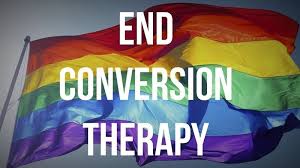
So-called “conversion therapy” or “reparative therapy” refers to any form of intervention, such as individual or group, behavioral, cognitive, or milieu/environmental operations, that attempts to change an individual’s sexual orientation or sexual behaviors (sexual orientation change efforts [SOCE]) or an individual’s gender identity (gender identify change efforts [GICE]).
Practitioners of change efforts may employ techniques including:
- Aversive conditioning (e.g., electric shock, deprivation of food and liquids, smelling salts and chemically induced nausea)
- Biofeedback
- Hypnosis
- Masturbation reconditioning
Underlying these techniques is the assumption that any non-heterosexual, non-cisgender identities are mental disorders, and that sexual orientation and gender identity can and should be changed. This assumption is not based on medical and scientific evidence.
Professional consensus rejects pathologizing sexual and gender identities. In addition, empirical evidence has demonstrated a diversity of sexual and gender identities that are normal variations of human identity and expression, and not inherently linked to mental illness. However, the unfounded misconception of sexual orientation and gender identity “conversion” persists among some health, spiritual and religious practitioners.
According to the UCLA Williams Institute on Sexual Orientation and Gender Identity Law and Public Policy, as of 2019, almost 700,000 lesbian, gay, bisexual, transgender and queer/questioning (LGBTQ) adults in the U.S. had received “conversion therapy;” in addition, an estimated 57,000 youths will receive change efforts from religious or health care clinicians before they turn 18 years old.4 In a national survey of over 35,000 LGBTQ youth ages 13–24, 13% of respondents reported being subjected to “conversion therapy,” with 83% reporting it occurred when they were under18.5 Another study found that nearly 18% of middle-aged and older men who have sex with men reported experiencing “conversion therapy.”
The Dangers of Conversion Therapy
Evidence does not support the purported “efficacy” of changing sexual orientation. To the contrary, these practices may cause significant psychological distress. One study showed that 77% of participants reported significant long-term harm, including the following symptoms:
- Depression
- Anxiety
- Lowered self-esteem
- Internalized homophobia
- Self-blame
- Intrusive imagery
- Sexual dysfunction
Participants also reported significant social and interpersonal harm, such as alienation, loneliness, social isolation, interference with intimate relationships and loss of social supports. Conversion Therapy may also increase suicidal behaviors in a population where suicide is prevalent. In young adults between 15 and 24 years old, suicide has been the second leading cause of death since 2011, and LGBTQ young adults are more than twice as likely to report a history of suicide attempts in comparison to their heterosexual peers. Similarly, LGB adults are three to five times more likely to have a suicidal attempt in comparison to their heterosexual counterparts.
Young LGBTQ adults who report higher levels of parental and caregiver rejection are 8.4 times more likely to report having attempted suicide. One study found nearly 30% of individuals who underwent conversion therapy reported suicidal attempts. In a Trevor Project survey, LGBTQ youth subjected to conversion therapy reported twice the rate of suicide attempts compared to those who were not.
No Legitimate Medical Authorities Support Conversion Therapy
All leading professional medical and mental health associations reject “conversion therapy” as a legitimate medical treatment. Yet, an estimated 36.5% of LGBTQ people, including 90% of transgender people, who have received this therapy, received it from a health care clinician.
In addition to the clinical risks associated with the practice, the means through which clinicians or counselors administer conversion therapy violate many important ethical principles, the foremost of which is: “First, do no harm.”
A health care clinician’s nonjudgmental recognition of and respect for patients’ sexual orientations, sexual behaviors and gender identity are essential elements in rendering optimal patient care in health, as well as in illness. This recognition is especially important to address the specific health care needs of people who are or may be LGBTQ as these patients often experience disparities in access to care. Yet administering change efforts is an inherently discriminatory practice often administered coercively and fraught with ethical problems, such as:
- Uninformed consent (change efforts are often prescribed without full descriptions of risks and disclosure of lack of efficacy or evidence)
- Breaches of confidentiality (content of treatment, sexual orientation and gender identity may be shared with family, school or religious leaders without proper consent)
- Patient discrimination (change efforts reinforce bias, discrimination and stigma against LGBTQ individuals) • Indiscriminate and improper treatment (change efforts are recommended regardless of evidence)
- Patient blaming (the failure of treatment may be blamed on the patient)
It is clinically and ethically inappropriate for health care clinicians to direct mental or behavioral health interventions, including conversion therapy, with a prescriptive goal aimed at achieving a fixed developmental outcome of a child’s or adolescent’s sexual orientation, gender identity or gender expression.
2026 Supreme Court Decision On Conversion Therapy
In 2026 the Supreme Court of the United States rendered an 8-1 decision against the State of Colorado which invalidated the state’s law banning conversion therapy. This decision also impacted some twenty-four other States who have similar laws banning conversion therapy.
Senator Scott Wiener, California, states “I want to be direct about what has happened here. The Supreme Court has issued a ruling that classifies psychological torture of LGBTQ people as somehow a form of free speech. It is an extreme interpretation of the Constitution, and it has real consequences for LGBTQ young people.”
The Supreme Court majority opinion however, explicitly leaves the door open for states to allow malpractice claims against providers who harm LGBTQ people with conversion therapy.
California State Bill: SB934
The bill allows survivors of conversion therapy to bring malpractice claims against the practitioners who harmed them, and it gives them far more time to do so, recognizing that survivors often need years before they are able to name what happened, process it, and come forward.
- If you were under 18 when the conversion therapy occurred, you may bring a claim any time before your 40th birthday.
- If you were over 18, you may bring a claim within 10 years of your last session.
- Any survivor may bring a claim within 5 years of discovering that an injury or illness was caused by conversion therapy.
The bill also clarifies that survivors can use the scientific and medical consensus — the overwhelming evidence that conversion therapy causes harm — when establishing their case in court. Practitioners who peddle this debunked torture should be held accountable, and SB 934 gives survivors the legal tools to do exactly that.
In today’s Supreme Court ruling, the Court specifically stated that malpractice claims are separate from conversion therapy bans and left the door open for such claims to proceed against providers who engage in conversion therapy and harm people. Just because the bans have been ruled unconstitutional does not mean that LGBTQ are defenseless from charlatans peddling false and traumatizing torture.
SB 934 is sponsored by Equality California, Lambda Legal, the National Center for LGBTQ Rights, the Trevor Project, and the California LGBTQ Legislative Caucus.
Are You A Survivor Of Conversion Therapy, or Are You Worried About Someone In Conversion Therapy
If you are a survivor of conversion therapy, SB 934 is for you. You deserve your day in court. The fact that it has taken years — or that you’re still processing what happened — does not disqualify you. That is exactly why this bill extends the window to file a claim as far as it does.
If you are worried about a young person in your life who may be at risk, please know that the Trevor Project’s crisis line is available 24/7: call or text 988 and press 3, or text START to 678-678. You can also reach the Trevor Project at thetrevorproject.org.