
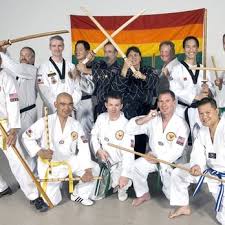
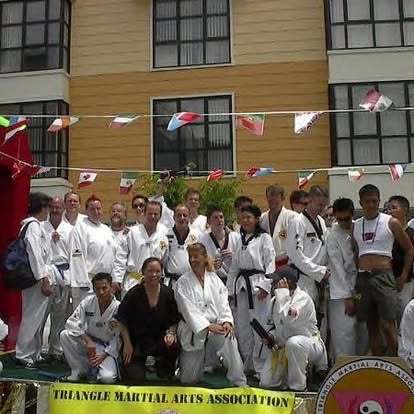
The Triangle Martial Arts Association (TMAA) was a San Francisco–based LGBTQ-focused martial arts organization that emerged during a difficult and transformative period for the gay community in the late 1990s and early 2000s. It became one of the most visible LGBTQ-inclusive martial arts organizations in the United States and had a significant impact on community safety, self-confidence, and social inclusion within the LGBTQ+ community.
Origins and Formation
The organization was founded in 1998 in San Francisco by martial arts instructor Ken Craig in the aftermath of the murder of gay college student Matthew Shepard. According to multiple organizational histories, the killing of Shepard deeply affected many in the LGBTQ+ community and motivated Craig to create a safe and affirming place where LGBTQ+ people could learn martial arts and self-defense without fear of discrimination.
The original organization began as the “Triangle TaeKwonDo Club” operating out of the Eureka Valley Recreation Center in San Francisco’s Castro District. It initially offered two free evening classes each week specifically designed to provide a welcoming environment for LGBTQ+ students.
At the time, many LGBTQ+ individuals reportedly felt unwelcome or unsafe in traditional martial arts schools, especially during the height of the HIV/AIDS epidemic when stigma and prejudice were widespread. Triangle became intentionally inclusive and community-oriented.
Within several years, the club expanded into the formal nonprofit Triangle Martial Arts Association. California corporate records show the nonprofit corporation was formally incorporated in December 2002, although trademark and organizational records indicate first use dating back to 1998.
How Large Was It?
TMAA grew substantially for what was originally a grassroots volunteer martial arts school.
According to organizational histories:
- It expanded from a single Tae Kwon Do class into a multi-discipline martial arts association offering:
- Tae Kwon Do
- Hap Moosa Ki Do
- JuJitsu
- Karate
- Yong Chul Do
- More than 500 students reportedly trained through the organization over approximately fifteen years.
- More than 30 students achieved 1st Degree Black Belt rank. Several advanced to higher black belt and instructor certifications, with some reaching master-level rankings.
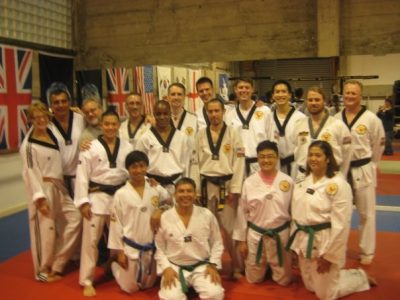
- In 2006, TMAA brought a team of fifteen martial artists to participate in the Gay Games Chicago 2006 as part of Team San Francisco.
The organization appears to have remained relatively modest financially but highly influential socially. IRS nonprofit filings show it operated as a registered nonprofit charity and filed Form 990 returns through at least 2010.
TMAA eventually ceased operations during the worldwide financial and housing crisis of the late 2000s and early 2010s.
Impact on the LGBTQ+ Community
The organization’s impact was broader than martial arts instruction alone.
1. Providing a Safe Space
Perhaps TMAA’s most important contribution was creating one of the few openly LGBTQ-affirming martial arts environments in the United States at the time.
During the late 1990s and early 2000s:
- LGBTQ+ people still frequently encountered discrimination in sports and fitness environments.
- Many martial arts schools were perceived as hyper-masculine or socially conservative spaces.
- HIV/AIDS stigma remained widespread.
TMAA offered an explicitly welcoming environment where LGBTQ+ people could train openly and safely.
For many students, this was not merely recreational—it was psychologically empowering.
2. Self-Defense and Personal Empowerment
The organization emphasized practical self-defense training alongside traditional martial arts discipline.
This focus had special resonance within the LGBTQ+ community because:
- LGBTQ+ individuals historically faced elevated risks of hate crimes and street violence.
- Many students joined specifically to gain confidence and personal safety skills.
- The organization promoted preparedness, awareness, and resilience.
TMAA’s later self-defense programs evolved into broader community safety training initiatives associated with Castro Community On Patrol.
3. Building LGBTQ+ Athletic Inclusion
TMAA also helped normalize LGBTQ+ participation in martial arts competition and organized sports.
Its involvement with the Gay Games was particularly important. The Gay Games were created to provide inclusive athletic competition at a time when many LGBTQ+ athletes still felt excluded from mainstream sports culture.
By organizing teams and encouraging participation, TMAA helped connect LGBTQ+ martial artists to an international movement centered on inclusion, visibility, and pride.
4. Community Leadership and Civic Engagement
The association also became intertwined with broader LGBTQ+ safety and civic organizations in San Francisco.
Former TMAA leadership later helped develop and support:
- Castro Community On Patrol
- the San Francisco Police Department LGBTQ+ Advisory Forum
- the SFPD Auxiliary Law Enforcement Response Team (ALERT)
- community self-defense education programs.
In that sense, TMAA’s legacy extended beyond martial arts into community safety activism and volunteerism.
Most Illustrious Order of Triangle
A key creation of TMAA in recognizing and promoting civic engagement and community activism was the creation of the heraldically based Most Illustrious Order of Triangle. This order identified and recognized martial artists and members of the LGBTQ+ and allied community who provided exemplary, consistent, and outstanding support and services to the overall LGBTQ+ community within San Francisco and worldwide. The order established three ranks:
- Knight Commander of the most illustrious Triangle Order (KCTO) – the highest rank attainable requiring considerable and consistent service and commitment to the LGBTQ+ community and/or the martial arts.
- Commander of the most illustrious Triangle Order (CTO)
- Knight of the most illustrious Triangle Order (KTO)
Historical Importance
While never a huge national organization numerically, TMAA represented something historically significant:
- an LGBTQ-centered athletic institution,
- a response to anti-gay violence,
- a community resilience project during the AIDS era,
- and a bridge between physical training, self-defense, and civic engagement.
For many LGBTQ+ people in San Francisco during that era, organizations like TMAA provided not only exercise and martial arts instruction, but also belonging, mentorship, confidence, and solidarity.
Its legacy can still be seen in ongoing LGBTQ community safety and self-defense programs in San Francisco today.